Conservation of Pocket Estuary Identified by Gayle Broadbent-Ferris, Acquired with Assist from Steamboat Conservation Partnership

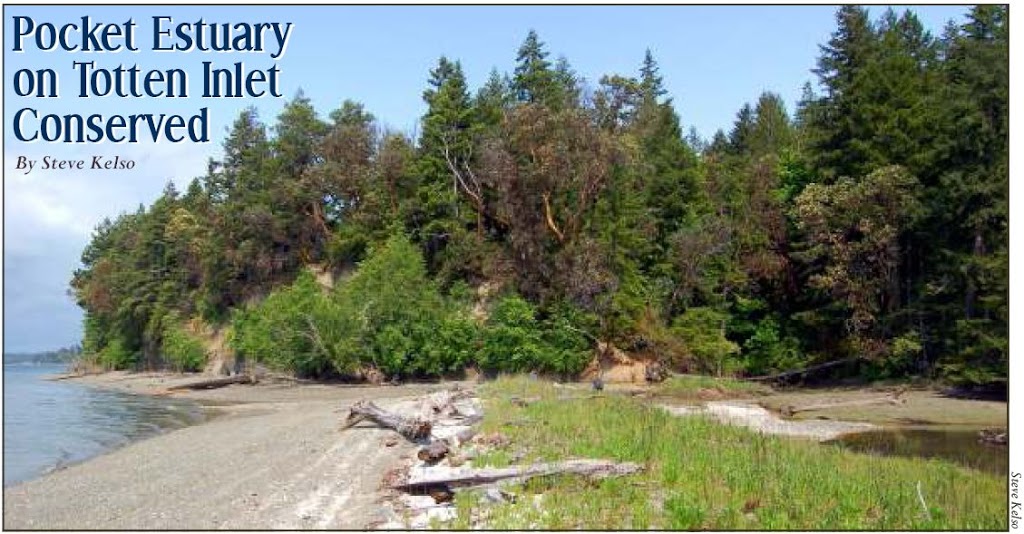
In early June 2011, Capitol Land Trust acquired a 34- acre property on the northeastern shore of Totten Inlet on the Steamboat Island Peninsula. The site has a small pocket estuary with critical salmon habitat, 1,400 feet of waterfront, steep bluffs that replenish natural gravel beaches, and small streams flowing from mature forests that cover most of the property.

Major grants from US Fish and Wildlife/WA Dept. of Ecology's Coastal Wetlands Grant program and the state's Salmon Recovery Funding Board helped finance the project. Other funds came from Taylor Shellfish, the Squaxin Island Tribe and the Steamboat Conservation Partnership.
"This is a relatively small piece of shoreline, but it has enormous biological value that will now be preserved and enhanced," said Capitol Land Trust's conservation projects manager Laurence Reeves.

According to Laurence, the project was originally championed by local resident and south Sound conservationist Gayle Broadbent-Ferris who died in an accident in 2009. She introduced the property to the Trust and helped keep interest in its preservation alive during a period when development was contemplated. "Gayle, more than anyone, would have been thrilled to know the property is now under conservancy," Laurence said.

Dave and Joanne Schuett-Hames, local residents who provided marine habitat expertise for the project, also mentioned Broadbent-Ferris's dedication to conservancy of the Adams Cove area. "She lived near the property," Dave said, "and felt it was not suitable for intensive development. She had great appreciation for the natural values of the wetlands and the estuary."

"This was a very complex project," said Laurence, "but eventually, through a lot of hard work on the part of many organizations and individuals, it all came together. We have skilled and dedicated staff, but we can't do it all. As with many of our projects, we relied on contributions of time and expertise from many members and volunteers. Their involvement was absolutely critical."

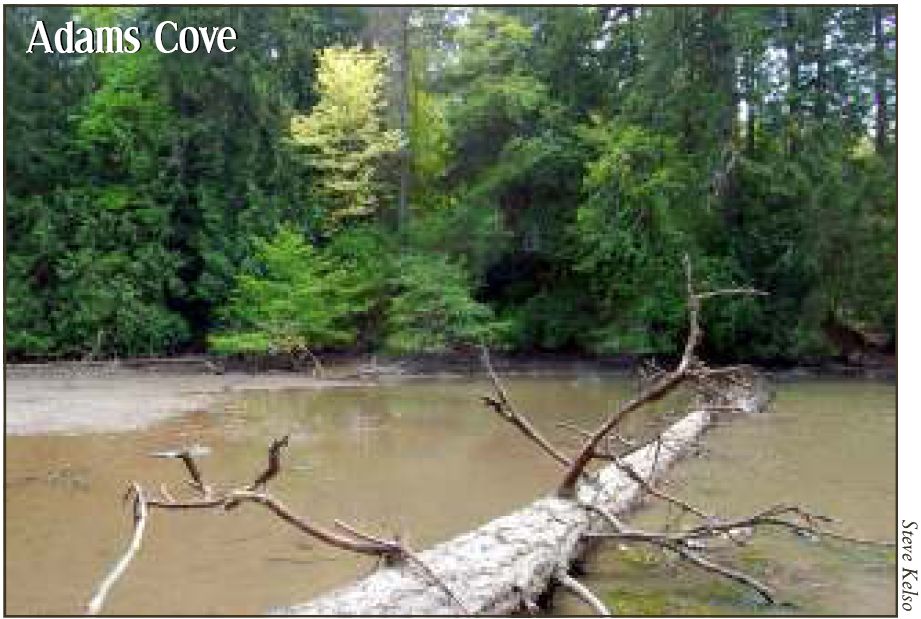
Near the start of the project, Laurence visited the site with Dave and Joanne to assess its potential. What they found was a pocket estuary in relatively pristine condition, with many acres of neighboring forest and wetlands that provide clean fresh water. The property, known locally as Adams Cove, includes a protective sand spit at the estuary entrance, a beach used by spawning forage fish, an intertidal salt marsh, and mudflats providing habitat for Puget Sound coho, winter steelhead, chinook, summer chum, and coastal sea-run cutthroat.

"This is a pretty special piece of the south Puget Sound ecosystem," said Dave. "Our job was to capture the nature of the place in language that biologists would understand, to provide heft for the technical and scientific aspects of the grant applications. We helped explain why this particular place, in its current state, is so beneficial to fish and other marine populations."

Dave and Joanne do this kind of work professionally, but they did it as volunteers for this project. They have helped Capitol Land Trust with several other projects as well.

The threat of commercial development above the shoreline bluffs accentuated the sense that the property should be conserved in its entirety. According to Dave, "The upland area is a forested wetland system that provides habitat for birds and plants, and is the main source of cool, clean fresh water for the estuary. Anything built on the bluffs would more than likely degrade water quality and the entire system's ability to sustain plant and animal life."
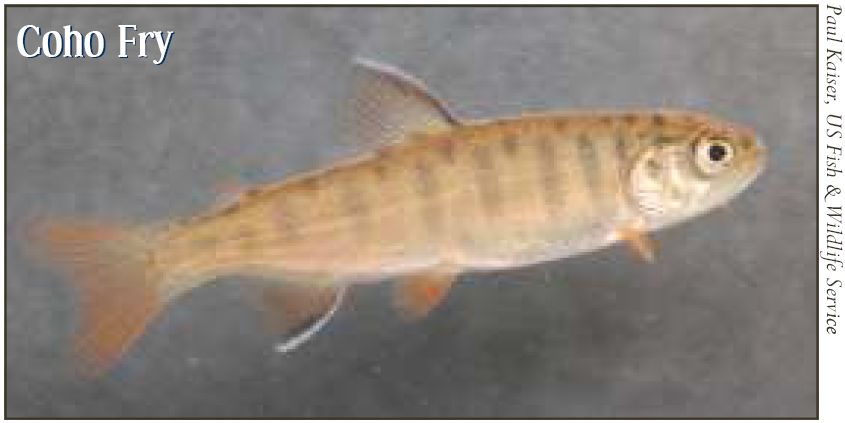
The estuary is also the mixing zone for fresh and salt water, and it’s especially important for the very large native chum run that spawns each year in Kennedy Creek at the southern end of Totten Inlet. According to Dave, "The fry come out of the freshwater creek in the spring as very small fish, only a couple inches long. The open water of Totten Inlet can be dangerous for them. The salinity presents a huge physiological adjustment, and it helps to have places like Adams Cove where they can find relatively fresh water to reduce that shock. The estuary, with its protective spit, shallow water, and overhanging trees, is a refuge from wave action and from predatory birds and fish. It’s also a source of small organisms for them to eat."

There is also evidence that young Chinook salmon from central and even northern Puget Sound forage in Totten Inlet and its estuaries before migrating out to the ocean.

One other important feature of the Adams Cove habitat, Dave said, is its undeveloped shoreline, with intact forest. "You have well-developed shoreline vegetation to feed the nutrient food chain," he said. "Some of the trees will fall into the estuary, providing good cover habitat in the water. And trees hanging over the water provide shade and help keep the water cool."

The other benefit of conserving this piece of land is the preservation of natural "feeder" bluffs, which help maintain the viability of beaches that are the spawning ground for sand lance, pacific anchovy, herring, and other "forage" fish on which salmon feed.

According to Dave, "When this kind of shoreline becomes highly developed, people often build bulkheads because they don't want the erosion. Eventually, over time, as that erosion is eliminated or controlled, the gravel can get scoured out, leaving nothing but clay. It's important to have unarmored bluffs with some erosion to provide gravel and sediment to replenish the beaches."

The Totten Inlet coastal shoreline is a permanent or migratory home to more than 100 bird species, including eagles, owls, ospreys, plovers, sandpipers, woodpeckers and loons, and the property has potential as a possible restoration area for the native Olympia oyster, Laurence said.

Both Laurence and Dave emphasized that Adams Cove is a particularly unspoiled pocket estuary. Many similar estuaries, especially those with spits, have been dammed up in the past to create freshwater ponds.

Dave stressed that each pocket estuary is part of a larger ecosystem that is important to newly hatched fish. "They don't just function in isolation," he said. "You get more benefit if there are a series of them along the shoreline that the fish can move into. Maintaining a network of them would be much better than just preserving one."

The main purpose of this project was to conserve the estuarine habitat. A corollary to that is recognition that human visits to the property, especially on land, are not necessarily beneficial to that purpose. "As with many of our projects," Laurence said, "we encourage thoughtful and respectful visitation for educational and scientific purposes. We want people to remember that hands-off is probably the best policy. Our five-year management plan for Adams Cove is to just let it do its own thing. And that’s in keeping with the intent of the funding agencies."
Steve Kelso is an Olympia writer, photographer, and painter who appreciates the work of Capitol Land Trust.

Capitol Land Trust Would Like to Thank These Project Partners:

WA Department of Ecology
US Fish and Wildlife Service
WA State Salmon Recovery Funding Board
Squaxin Island Tribe
Taylor Shellfish Farms
Steamboat Conservation Partnership
Dave and Joanne Schuett-Hames
ADESA Environmental Services
Michael and Lorrie Asker, William and Bonita Asker, Michael and Tracy Evans.

Article reprinted with permission from Capitol Land Trust. This article and accompanying photographs was originally printed as "Pocket Estuary on Totten Inlet Conserved" in the Summer 2011 issue of the Capitol Land Trust Newsletter.
  
The Griffin Neighborhood Association formed the Steamboat Conservation Partnership with Capitol Land Trust “to conserve the rich and diverse natural landscapes of the Steamboat Peninsula region.” Help us to preserve habitat, now and forever, right here in our neighborhood. Click here to learn how you can support the Steamboat Conservation Partnership.
Pocket Estuary on Totten Inlet Conserved

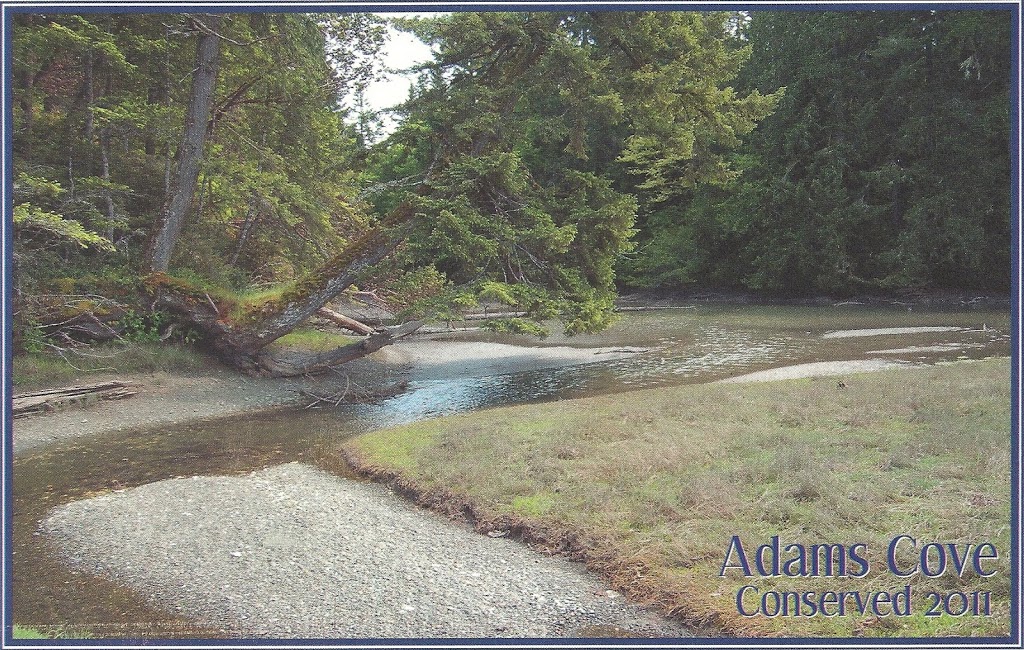
Capitol Land Trust's collaboration with the Steamboat Conservation Partnership has resulted in the conservation of 34 acres on Totten Inlet, one of the most significant shorebird habitats in Washington's inland marine waters. The purchase includes a small pocket estuary and 1400 feet of undeveloped shoreline on the Steamboat Island Peninsula known locally as Adams Cove. Most of the new preserve is covered by mature forest, about half of which is forested wetland. Several small freshwater streams flow into the estuary.

The tireless dedication of Gayle Broadbent-Ferris directly resulted in Capital Land Trust's efforts to acquire this spectacular property. We are forever indebted to her encouragement.

The Capitol Land Trust thanks their partners who made this project possible: Washington Department of Ecology, U.S. Fish & Wildlife Service, Washington State Salmon Recovery Funding Board, Taylor Shellfish Farms, Squaxin Island Tribe, Steamboat Conservation Partnership, Dave & Joanne Schuett-Hames, WRIA 13-14 Lead Entity Coordinator, ADESA Environmental Services, Michael & Lorrie Asker, William & Bonita Asker, Michael & Tracy Evans.

Click here to read The Olympian's coverage of the purchase.

Click here to learn more about the Steamboat Conservation Partnership and how your support will help to identify and conserve habitat right here, in our own neighborhood.

Photo by Steve Kelso


Sellers and Browsers Invited to St. Christopher's Yard Sale on July 23rd

All types of vendors and crafters are welcome to sell at the St. Christopher's Yard Sale. Whether you are selling or browsing for items to purchase, mark your calendar for Saturday, July 23rd.

St. Christopher’s Community Church's Yard Sale
7902 Steamboat Island Road NW

Saturday, July 23rd, 2011, rain or shine
9 am to 3 pm (spaces must be cleared by 4 pm)

Sellers pay $15 for booth space before July 15th, after July 15th prices increase $5. Booths will be set up outdoors, on the grass. The event is being held rain or shine, so plan accordingly and bring a canopy. Set-up will begin at 7:30 am Saturday morning.

Click here to download a copy of the flyer, which includes details and a form to be used to reserve space for a booth.

Questions? Call: 866-2111 or e-mail stchriscomm@aol.com


Meet Your New Neighbor: The Members' Only Steamboat Island Athletic Club

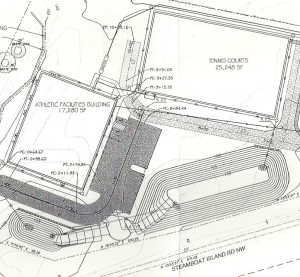
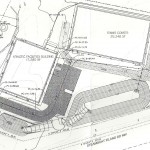
Detail from the current approved site plan

Local residents cannot help but notice the activity on the prairie at the corner of Steamboat Island and Sexton roads. In recent weeks, grading has commenced on a 5.2 acre parcel owned by STAC Properties, LLC (Drake Nicholson and Desiree Forbes). A number of inquiries have been received by members of the Griffin Neighborhood Association as to what's up. We can now report that Mr. Nicholson is indeed moving ahead with construction on a pair of buildings totaling 43,020 square feet to house a "members' only" facility with indoor tennis courts, a salon with massage, manicure/pedicure, sauna and tanning facilities, a weight room, racquetball court, climbing wall, hot tub, and a small swimming pool.

Meet the new neighbor. Except for the Griffin School, nothing as big as this structure exists in our area. Beyond the footprint on the ground, too, the height required to accommodate tennis courts may put this among the highest structures.

Mr. Nicholson purchased the parcel in April, 2003 and made application in mid-2004 to build the Steamboat Island Tennis Club. The original application required a Special Use Permit (the parcel is zoned for rural residential use) for the construction of a 43,200 square foot building "for indoor tennis and other associated athletic uses such as a weight room, locker room and swimming pool. In addition," according to that original application, "the facility includes two outdoor tennis and 151 parking stalls." Copies of the original application materials are available on the web site of the Griffin Neighborhood Association.

Long before grading equipment set to work on one of the last undeveloped portions of prairie in our area, voices had been raised against the project. Some objected to the development as a "huge, urban and high density athletic facility." One local resident, Steve Lundin, filed a formal appeal against approval of the application. In a letter to the County's Permit Assistance Center, Mr. Lundin wrote the project "(1) Violates the county zoning code; (2) is incompatible with the County Comprehensive Plan and the State’s Growth Management Act; and (3) will have substantial and undue adverse impacts on the Griffin community."

Other residents welcomed the possibility there might be built an athletic facility closer to home.

While the Board of the Griffin Neighborhood Association did not take a position either in favor of or against the project, they did note a number of inconsistencies in the plans and wrote in a memo to Association members that "confusion exists about the project details." Early in the planning stages, Mr. Nicholson had approached the Board to describe what he had in mind. However, many on the Board at the time reported the plans discussed appeared to be so fluid as to be impossible to say exactly what it was Mr. Nicholson was actually going to build. Some expressed concerns over the long-term viability of the business being proposed for such large buildings.

In May, 2006, the County's Hearing Examiner upheld the decision to approve the Special Use Permit and denied Mr. Lundin's appeal against the County's approval of the project. Although zoned Rural Residential, as is much of the land on our peninsula, the Hearing Examiner allowed to go forward plans to construct what he described as two buildings "proposed to be 35 feet in height."

The Comprehensive Plan requires development to remain rural in character and to balance human uses with the natural environment, and it requires commercial uses to be small in scale for provision of convenience services to the surrounding rural neighborhood.

Following the Hearing Examiner's decision, an appeal was filed with the County Commissioners. The size regulations for athletic facilities in the county were not in place at the time of the original application. Commissioner MacLeod abstained from voting "due to his concerns about the special use application and whether or not it was properly vested under the rules relied upon by the Hearing Examiner." However, the two remaining Commissioners, Cathy Wolfe and Diane Oberquell, upheld the Hearing Examiner's decision.

That's where things ended back in July, 2006.

In October, 2009, Mr. Nicholson filed an amended application. This time the facility included a pro shop and a "café/deli."

In the intervening years, little the public would be aware of appears to have been done with the parcel. That is, until a few weeks ago. That's when the grading began. We now have received from the County a packet of materials with the latest site plans. The pro shop and café/deli are out. The County's Amended Administrative Site Plan Review includes a copy of correspondence from the Public Works Department, dated this last March, and a memo from the Environmental Health Department, in April. A blank Administrative Appeal Application Form was also included.

The County is recommending approval of the permit and for the project to proceed. A nonrefundable fee of $1710 would be required to appeal the decision. Such an appeal would need to be filed by June 15.

Click here to peruse our archive of documents related to the Steamboat Island Athletic Club.

Watch this space for more information, as it becomes available.

Building Earth Farm and Madrona Grove Fruit Truck Readies for the 2011 Season

Building Earth Farm, at 9140 Steamboat Island Road, is now taking orders for the 2011 season and announcing a Summer Celebration on July 1st. In the Griffin area, we're lucky to have access to a variety of local agricultural producers. We've written about Building Earth Farm on this blog, before. And, Building Earth Farm is one of the locations for the Madrona Grove Fruit Truck.

Summer Celebration
Friday, July 1st
4 PM to 7 PM
9140 Steamboat Island Rd. NW

On the afternoon of July 1st, the Building Earth Farm will open its' garden gates to celebrate the opening of the season. There'll be samples to taste and purchase.

Building Earth Farm Stand
Open weekly Tuesdays and Fridays, 12 noon to 7 PM
Beginning in late June (Mother Nature sets the exact date)

The Madrona Grove Fruit Truck will once again bring Washington-grown fruits picked at the perfect ripeness, local vegetables, and weekly surprises to you at 9140 Steamboat Island Road.

Building Earth 2011 Harvest Dates

Broiler Chickens
July 15, 16, 17
August 19, 20, 21
September 23, 24, 25

Lamb
October-November

Turkey
Mid-November

Building Earth Farm is now taking orders for broiler chickens. Their animals are raised without antibiotics or hormones; outdoors on pasture, connected with the ground. The chickens and turkeys are also fed organic grain.

For more details and to put your order in for broiler chickens, contact the Building Earth Farm directly:
9140 Steamboat Island Rd. NW
Olympia, WA 98502
867-2810


Local Native American Heritage

SquaxinIslandLogoIndigenous peoples have inhabited the southern Puget Sound area for many centuries.

Prior to the arrival of Euro-Americans, indigenous peoples inhabiting Puget Sound had a vibrant culture and relatively dense populations. They were maritime peoples who called themselves "People of the Water". Puget Sound was sacred. It also served as their basic means of transportation and a source of food.

Prior to the Medicine Creek Treaty of 1855, native peoples living in southern Puget Sound were known by the inlet on which they lived. A separate band of native peoples occupied each inlet. They were known by the name of their inlet. People living along both shores of what is now called Eld Inlet were known as the Squi-Ailt. People living along both shores of what is now called Totten Inlet were known as the T'Peeksin. The Squaxin Tribe was formed after the Medicine Creek Treaty from seven separate, but closely related, bands of native peoples living on seven separate inlets in southern Puget Sound.

During the cold weather season, members of each band lived in a large cedar long house in a more or less permanent village located at the sheltered end of their inlet. These were the times when members of the band lived communally, repeated their legions and stories, and instructed their children in tribal ways. During the warm weather season, families units from each band fanned out along both sides of their inlet and lived in less permanent dwellings. They harvested the bounty of the inlet and prepared for the next cold weather season. Proximity to fresh water was a prerequisite for locating a permanent cold weather village and the more numerous, transitory warm weather sites.

One of these winter village sites for the Squi-Ailt was at the archeological dig on former Secretary of State Ralph Munro's property located on the eastern shore of Mud Bay near the southern end of Eld Inlet.

T. T. Waterman was a noted anthropologist at the University of Washington during the early years of the 20th century. He met with tribal elders in southern Puget Sound in 1910 and recorded important sites. More than 33 of these sites were noted on the Steamboat peninsula or Griffin area.

Waterman noted the abandoned site of a "large and thriving" village at the southern end of Mud Bay, a little north of the modern-day intersection of Delphi Road and MacKenzie Road. He failed to note the site of the archeological dig at Ralph Munro's as being the site of a village, although he mentioned the three creeks on Ralph Munro's property. Apparently, the village site mentioned by Waterman had succeeded the earlier village site at Munro's property, although both sites were abandoned by 1910.

Perry Creek was known as "Balablts" or on the side toward the spring. It is noted as being a "large creek flowing into a cover".

Rocky Point is also called Maple Point and was called "TsEbtsEdid" which suggests dancing place or "elderberry place".

Young Cove was called "q!abt!o" or "abounding in food".

Flapjack Point was noted as being prominent and was known as "qwet qs" or down-stream promontory.

Fry Cove was noted as being a very narrow cove that was known as "Tu caix" signifying an edible root that was dug by Native peoples. This may have been Camus.

Sanderson Cove was described as being a very narrow cove known as "Tu qwa'lot sid" or "fish trap at its mouth". A weir was built across the mouth of the inlet that would trap fish when the tide receded.

Hunter Point was known as "Djie' kclL" which means "foot". Presumably this meant wet foot describing waves that rush up to the foot of the cliff, fall back, and then rush up again.

Sandy Point, near where the bridge to Steamboat Island is located, was known as "CxwE' tsugEL" which suggested sharp breath.

Steamboat Island was known as "SxetElp" or "pushing off from shore", presumably referring to the appearance of the island as though a canoe was leaving the mainland. It is fitting that one of the modern rationales for naming the island Steamboat Island is that the island resembles a steamboat.

Gallagher Cove was known as "Bicola'lala" or "a place with many cattail rushes". Cattails were very important for weaving baskets.

The promontory at northern point at the northwest end of Gallagher Cove was known as "hwEts - toi'q - stEb" which means "sharp prodding". This relates to the belief that a storm will be caused if anyone pokes the bottom of the inlet there with a pole or paddle.

Burns Point was known as "T!EbE' x" which means "gooseberries".

-- STEVE LUNDIN
Copyright 2011 by Steve Lundin

Steve Lundin is a long-time resident of the Griffin community located in northwest Thurston County.  He received a B.A. degree from the University of Washington and a J.D. degree from the University of Washington Law School and is now retired as a senior counsel for the Washington State House of Representatives after nearly 30 years.

He is recognized as the local historian of the Griffin area and has written a number of articles on local history and a book entitled Griffin Area Schools, available from the Griffin Neighborhood Association at a cost of $10. 

Lundin also wrote a comprehensive reference book on local governments in Washington State entitled The Closest Governments to the People – A Complete Reference Guide to Local Government in Washington State.  The book costs $85, plus shipping and handling.  It is available on the web from the Division of Governmental Studies and Services, Washington State University, at http://dgss.wsu.edu/ or from WSU Extension at www.pubs.wsu.edu

Click here for more articles of interest, regarding local history.

Elizabeth Hummel benefit concert for SCP

Elizabeth Hummel Leads Local Musicians in Successful Benefit Concert

clipboard

Reva Wittenberg (left) and Elizabeth Hummel, onstage at Prosperity Grange

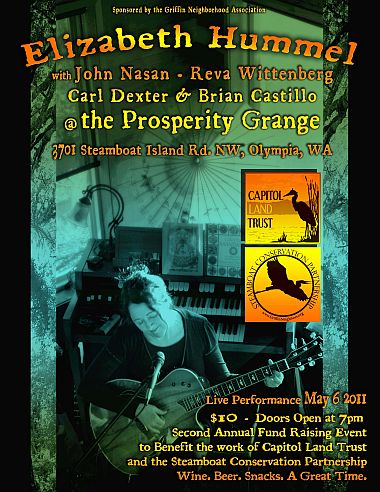
This last Friday night marked the second annual concert to benefit the Steamboat Conservation Partnership between the Capitol Land Trust and Griffin Neighborhood Association. Area residents gathered at the Prosperity Grange to hear a live concert by musician Elizabeth Hummel with John Nasan, Reva Wittenberg, Carl Dexter and Brian Castillo. It took about all the chairs the grange supplies, plus seating on benches along the walls, to contain the audience. They heard two sets of music and intermission comments from Eric Erler, Executive Director of the Capitol Land Trust.

hummell_show

Event poster by Brian Castillo

The event represented a collaboration between local musicians, business, and area residents. Elizabeth Hummel, who lives on Steamboat Island, approached the Griffin Neighborhood Association with an offer to play the benefit after she learned about existence of the Partnership. Local musician Brian Castillo, who plays with Hummel, produced a truly beautiful poster for the event. Pacific Stage donated the sound and lighting for the event. Music 6000 staffed the sound board during the concert. Beer was donated by Fish Brewing Company. The Costco Warehouse in Tumwater made a cash donation to help offset the purchase of snacks. Volunteers - GNA Board members, spouses and area residents - worked to set up and then kept the supply of snacks and beverages flowing to the audience who turned out to hear the concert and to support the Steamboat Conservation Partnership.

The goal of the Steamboat Conservation Partnership is to conserve land critical to the wildlife and natural beauty of this area.

Elizabeth Hummel made a special contribution, in the form of a song especially for the Steamboat Conservation Partnership.

Visit the GriffinNeighbors YouTube channel for this and other videos.

Last year, the Griffin Neighborhood Association joined with folk band Gaelica to present the first benefit concert for the Steamboat Conservation Partnership. At that time, the Association hoped to sponsor an annual event, but had no idea as to how to attract another musical guest. It was an unexpected pleasure to be contacted by Elizabeth Hummel, for this year's benefit. The Board of the GNA is gratified by the effort undertaken by Elizabeth and her talented fellow musicians to make the second annual concert a reality.
Interested in hearing more of Elizabeth Hummel's music? Elizabeth Hummel "The Cauldron" and Click here for more CDs by Elizabeth Hummel

For more coverage of this event, click here to visit our Facebook page. Do you have photos or video of Friday's concert you would like to share? "Like" us on Facebook and post them on our wall. Or, email us at gna@griffinneighbors.org.

PSLogoDefault

Thank you, Pacific Stage, for your support!

logo_front

Thank you, Fish Brewing, for your support!

Music6000

Thank you, Music 6000, for staffing the sound board during the event.

The Annual "Death to Scotch Broom" Blog Posting

Every year, around this time, all those yellow flags - those scotch broom flowers - come out to wave. Next will come the seeds and, next year, more scotch broom. There are noxious weeds and then there's scotch broom. Now is an excellent time of year to get serious about reducing the amount of scotch broom on your property.

So, responsible rural property owners want to know: What makes scotch broom so bad?

Scotch broom is a prodigious seed producer. The seeds have hard coats enabling them to survive in the environment for up to 80 years. Once established, scotch broom forms dense brush fields over six feet tall. The brush fields diminish habitat for grazing animals, such as livestock and native animals. Areas of dense brush shade out and kill native grassland plants in invaded areas, and favor invasion by other woody, non-grassland plant species.

Scotch broom prevents reforestation, creates a high fire hazard, renders rangeland worthless and greatly increases the cost of maintenance of roads, ditches, power and telephone lines. Wildlife suffers as the growth becomes too dense for even quail and other ground birds to thrive. Being slightly toxic and unpalatable it is browsed very little by livestock.

If you cut your trees, so that a lot of sunlight reaches the ground, you've probably now got scotch broom to cut.

How do you eradicate scotch broom?

There are two schools of thought, those who say pull out the whole plant and those who will tell you, if you're clever and your timing is right, all you need are a pair of lopping shears.

From the School of Pulling Out the Plant, we get these instructions:

Pull out the entire plant, including roots. When the soil is moist, small plants can be pulled easily by hand. Winter and spring are good seasons to do this.

Larger plants must be removed with a tool such as a Weed Wrench. Be sure to remove the entire plant. Broken stems re-sprout and are much harder to remove for the next person. Plants can be left where pulled.

One of the benefits of being a member of the Griffin Neighborhood Association is members can rent our Weed Wrench.

Not yet a member of the GNA? Dang, what are you waiting for?! Click here to join online.

From the School of Cutting Broom in Bloom, we get these instructions:

First, cut broom in bloom. Use loppers or small saws and cut broom right at ground level.

Broom puts all of its energy into making flowers. If you cut it while in bloom, it will most likely die in the summer's dry heat.

If you have to make a choice, go after single plants and small infestation to prevent its spread.

If the broom is huge, cut off as many of the branches as you can. If the broom is small and not blooming, you can return and cut it next year when it blooms.

It is most important to not let the broom go to seed! Cut before June 17 (this date is from Vancouver Island's “BroomBusters” web site, so it's probably earlier, down here in the South Sound).

CUT DOWN ALL YELLOW FLOWERS so that they can not turn into seeds. Each scotch broom plant can produce 2,000 to 3,500 seed pods - which burst open, shooting seeds into adjacent soil. If you cut them while in bloom - no seeds!

HERBICIDES applied in the spring when new leaves are present are another effective control tool, but always remember to read the labels carefully and exercise extreme care when applying chemicals, especially near waterways.

DO NOT BURN SCOTCH BROOM! When exposed to fire, its seeds burst from their seedpods. Also, the smoke from burning scotch broom is actually toxic and may seriously irritate the respiratory tracts of you, your family, or your neighbors.

TAKE SCOTCH BROOM TO THE DUMP. The best way to get rid of scotch broom, once it is cut, is to take it to Thurston County Waste and Recovery Center.

The Thurston County Noxious Weed Control Agency offers the following information and services to the public: Educational presentations, plant identification especially those that may be noxious weeds, consults on your property, prescriptions for specific noxious weed problems and what the county approves for its own use, free disposal of designated noxious weeds at the Thurston County Waste and Recovery centers, and limited use of a manual removal tool called the wrench. Also available are many informational brochures and pamphlets as well as several videos.

So, responsible homeowner, get out there and cut your scotch broom!

Science Café - "The Magnitude 6.5 Puget Sound Earthquake of Fall 2011" - May 10

The Science Café of Olympia will meet next on Tuesday, May 10, 2011 at 7:00 pm.

Batdorf & Bronson Coffee House
516 Capitol Way S, Olympia WA

This month's topic is "The Magnitude 6.5 Puget Sound Earthquake of Fall 2011 – that no one will feel."

We are expecting a slow-slip "earthquake" next fall in western Puget Sound. While it is likely to be about a magnitude 6.5 or maybe larger, no one will feel it since it will last about three weeks instead of 20 seconds like a regular earthquake. The relatively new discovery of slow-slip earthquakes and the latest research on them and do they mean that the "big-one" is coming will be discussed. Cascadia happens to be one of the best laboratories in the world for studying this phenomenon, now called Episodic Tremor and Slip (ETS).

Our speaker is Dr. Steve Malone, Prof. Emeritus and Past Director of the Pacific Northwest Seismic Network, Department of Earth and Space Science, University of Washington.

Date of next meeting: Tuesday, June 14, 2011. "Radiation and Health." Dr. Al Conklin, Health Physicist, Deptartment of Health.

The Science Café of Olympia, based on the Cafés Scientifique which began in the UK, provides an informal atmosphere where people both with and without a scientific background can meet and gain a better understanding of interesting topics on science and technology After a brief presentation by an expert in the field, the meeting will be opened to discussions among everyone in attendance.

Presentations will focus on issues that impact our lives locally, nationally and internationally.


India, an Overlooked Partner for Trade, Tourism and Educational Exchanges

Olympia World Affairs Council Lecture
THURSDAY, April 21, Olympia Center, 7:30 PM, Room 101
SPEAKERS: Sam Reed, Washington Secretary of State, and Stephanie Horn, Secretary of State’s Outreach Director
TOPIC: India, an Overlooked Partner for Trade, Tourism and Educational Exchanges
The most populous democracy in the world with 1.2 billion people, India is an ancient civilization that has become revitalized since gaining independence after centuries of colonial rule. Although it is one of the world’s fastest growing economies, it faces daunting challenges in overcoming poverty and developing its infrastructure. Secretary of State Sam Reed recently led the first U.S. delegation to reenter India since the worldwide recession began. They visited New Delhi, the capital; Agra, the home of the Taj Mahal; Mumbai (Bombay), the commercial center of India; and Hyderabad, India’s Silicon Valley.